Abaixo, você encontrará todas as informações e todos os formulários de solicitação necessários para gerenciar seu estande na feira.
O manual online fornece informações vitais para ajudar o expositor a se preparar para a feira, e coordena os serviços com simplicidade e eficiência. Nele, o expositor pode acessar os serviços de montagem e os serviços técnicos para o estande, aluguel de mobiliário e conveniências, limpeza e gestão de resíduos e outras informações importantes, tais como prazos para suas solicitações.
Carga Estática
A movimentação de máquinas dentro do pavilhão deverá respeitar o limite máximo de 3.500 kg/m².
Deve-se evitar estacionar o veículo de transporte com as rodas em cima das tampas metálicas das canaletas do piso ou passar com as rodas longitudinalmente sobre elas.
Atenção: Durante a montagem, a ÚNICA empresa autorizada a circular com caminhão dentro do pavilhão a partir das 18h do 20 de agosto é a Transportadora oficial, que tem um custo maior devido à obrigatoriedade de seguro do pavilhão, além do seguro das cargas.
Altura máxima permitida/Recuo (afastamento)
Em caso de dúvida sobre este item, contate o departamento de projetos da Two L Eventos pelo telefone 11 3197-0644.
A altura máxima do estande é de 5m a partir do piso do pavilhão. Os produtos da Expositora devem ficar contidos dentro dessa altura.
Estandes sob o mezanino dos pavilhões Azul e Vermelho deverão ter altura máxima de 3,2 m a partir do piso.
Os produtos da Expositora deverão ficar contidos dentro dessa altura.
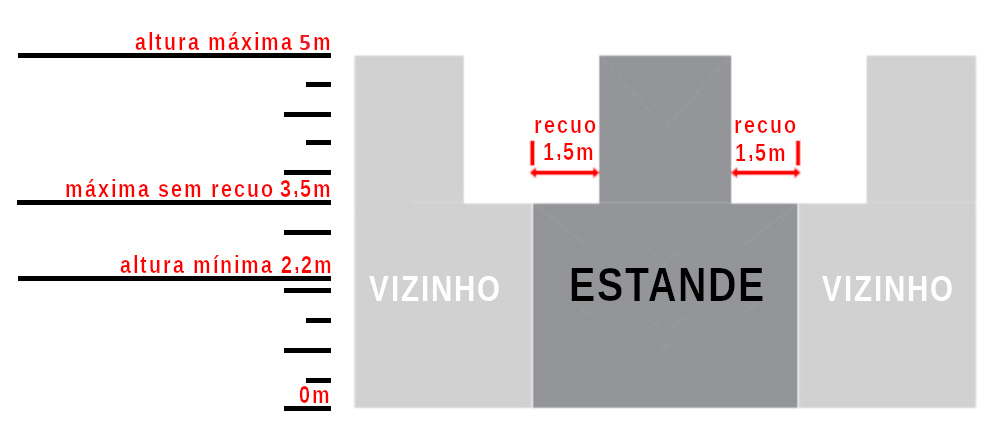
Acima de 2,2m, qualquer seja a localização do estande, é obrigatório fazer acabamento da parede voltada para o vizinho, com material compatível com o do estande, sem qualquer tipo de propaganda.
Estandes com altura superior a 3,5m a partir do piso do pavilhão deverão estar recuados do estande vizinho conforme o diagrama abaixo:
Atenção: É proibido colocar qualquer material ou equipamento sobre a tampa dos hidrantes do pavilhão, ou obstruir os extintores fixados nas colunas. Caso haja necessidade de construir algum elemento junto a esses equipamentos, o livre acesso a eles deverá ser mantido e sinalizado.
Pisos elevados
Quando o piso for elevado, é obrigatória a instalação de rampa de acessibilidade de PcD (Pessoa com Deficiência) ou com dificuldade de locomoção, independentemente de sua metragem. Estandes com desníveis de até 20cm devem incluir rampa de acesso com inclinação entre 8,33% e 10%. As rampas devem ser chanfradas em suas laterais, com largura mínima de 1,2m, com vão livre para a passagem do cadeirante de 0,8m de largura.
Pisos em estande com hidráulica
Caso precise de ponto de hidráulica em seu estande, é obrigatória a instalação de piso elevado com o mínimo de 5cm de altura na área de instalação hidráulica e/ou conforme a distância da canaleta, quando no interior do estande.
Paredes de vidro
As paredes montadas com painéis de vidro simples deverão ter altura máxima de 3,5m e conter sinalização de segurança. Acima dessa altura, só serão permitidos painéis de vidro que contenham a aplicação de película de segurança do tipo insulfilm ou painéis de policarbonato, acrílico, vidro laminado ou temperado.
Atenção: É terminantemente proibido fazer furos ou aplicar tintas, colas ou outros materiais nas paredes, pisos, instalações ou estruturas dos pavilhões, bem como encostar ou usar qualquer tipo de material de apoio em paredes, colunas ou portas.
Limites do estande
As vias de circulação e os estandes vizinhos não poderão ser utilizados para a colocação de materiais, ferramentas, sacos de lixo e produtos a serem instalados no estande. Toda operação deverá ser realizada exclusivamente dentro dos limites do estande. Devido o alto fluxo de circulação, as ruas do evento bem como as rotas de fuga não poderão ser comprometidas com elementos fixos ou móveis. Assim, o Expositor deve prever a organização de filas e ações de interatividade no interior do estande, sem comprometer as ruas, o conforto e segurança do público.
Estandes de dois pavimentos
No pavilhão Azul-B é proibida a montagem de estandes com segundo pavimento
Somente estandes de ilha e com no mínimo de 100m² poderão ter um segundo pavimento. A área total do segundo pavimento não poderá, em hipótese alguma, ser inferior a 10% ou exceder 40% da área total do piso térreo.
• A altura máxima do segundo pavimento deverá respeitar o pé direito livre dos pavilhões, que é de 6m, já contando com o segundo pavimento.
• A escada deve ter 1,2m de largura de vão livre sem contar o corrimão.
• No caso de escada caracol, esta não poderá ter diâmetro inferior a 1,2m para acesso ao público ou 0,8m caso o segundo pavimento seja utilizado apenas como área de estoque.
• É obrigatória a colocação de uma placa visível, com letras de no mínimo 5cm de altura, informando a capacidade máxima de pessoas no segundo pavimento, expressa em peso (kg) e em número de pessoas permitidas. A informação deve constar nas escadas de acesso ao piso superior.
• Por motivo de segurança, a área do segundo pavimento com guarda-corpo voltado para via de circulação deverá ter recuo de no mínimo 1m.
• É proibido o uso de vidro no piso superior. Somente será permitido o uso de acrílicos, policarbonato e materiais similares.
• A estrutura do segundo pavimento deverá ser montada em aço, de acordo com as normas da ABNT.
• A estrutura deverá ser dimensionada de acordo com a capacidade de carga admitida em projeto.
• Utilizar estruturas metálicas e pré-fabricadas, prontas para a montagem por sistemas de encaixe e parafusos.
• Não é permitida a construção de estrutura metálica por meio de corte de soldagem dentro do pavilhão. Caso necessário, serão permitidos apenas pequenos serviços de soldagem de reforço ou arremate devidamente acompanhados pelo Bombeiro munido de extintor.
• Apoiar as colunas diretamente sobre o piso do Pavilhão com o uso de sapatas em chapas metálicas de 30cm × 30cm e proteger os pisos do pavilhão com borracha.
Estruturas aéreas
Para contratação de pontos aéreos é necessário entrar em contato diretamente com o fornecedor oficial do Expo Center Norte, a empresa Estruturas Aéreas:
E-mail: atendimento@estruturasaereas.com.br | Telefone: (11) 3865-1197 / (11) 96191-2900
Preço por ponto: R$ 420,00 para montadoras e expositoras.
Capacidade de peso por ponto: 50kg
Elementos em balanço e projeção vertical do estande
Só serão permitidos elementos em balanço cuja projeção seja interna ao estande. Balanços sobre áreas comuns ou estandes vizinhos são proibidos.
Cabos
Não é permitido passar cabos ou quaisquer elementos de ligação que cruzem ruas, áreas comuns ou estandes vizinhos. Essas necessidades deverão ser previstas com antecedência e solucionadas em conjunto com a Aranda Eventos.
Estandes parcialmente sob o mezanino dos pavilhões Azul e Vermelho
Caso a Expositora deseje construir elementos acima de 3,2m na porção de seu estande que não está sob o mezanino do pavilhão, esse elemento construtivo do estande deverá obrigatoriamente estar recuado em pelo menos 0,5 m do mezanino.
Comunicação visual × estande vizinho
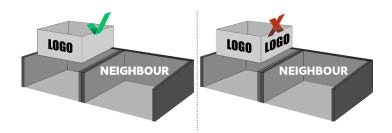
Não é permitida a aplicação de comunicação visual (logotipo, imagem, grafismo e etc.) voltado para os estandes vizinhos quando geminados. É permitido explorar apenas as fachadas de acordo com a configuração da área locada, não importando o ângulo de instalação ou a distância do recuo.
Estandes ilha, ponta de ilha, fechamento e visibilidade
Em nenhuma hipótese, os estandes podem impedir totalmente a visualização interna das faces voltadas para as vias de circulação do evento. Será permitido o fechamento, sem permeabilidade visual, de até 40% da metragem linear de cada face do estande. Acima disso, são permitidas apenas paredes de vidro transparente, acrílico transparente ou material similar desde que os mesmos estejam sinalizados com uma tarja (por motivo MANUAL DO EXPOSITOR de segurança), sistema de painéis decorativos recortados, ripado, metálico vazado, de modo a garantir a visualização das ruas e estandes vizinhos, e sem exceder o limite de até 60% da metragem linear de cada lado, ou
deve recuar o mínimo de 0,5m da face do estande.
Por exemplo, um estande de 10m×10m poderá ter um total de até 4m de fechamento cego. Caso as laterais sejam de materiais com permeabilidade visual, pode-se adicionar até 2m àquele limite, chegando a um limite total de até 6m .
O Central do Expositor é uma área protegida por senha na qual você se registra para enviar sua inscrição para uma de nossas exposições como expositor principal ou coexpositor.
Uma parte do Exhibitor Cockpit é o nosso Order Center, onde você pode reservar vários serviços de marketing e editar seus dados na lista de expositores.
Observe que somente a pessoa que foi fornecida como contato principal do expositor terá acesso à central de pedidos. Envie-nos um e-mail se for necessário alterar a pessoa de contato principal.
Veja abaixo a opção de download da planta técnica completa.
Ela inclui todos os expositores e suas dimensões, bem como todas as informações técnicas sobre os pavilhões de exposição.
Descubra se o seu estande está localizado na seção A ou B, que determina quando os caminhões poderão entrar nos pavilhões de exposição para a montagem.
Estandes do setor A: 20 de agosto, das 8h às 13h
Estandes do setor B: 20 de agosto, das 13h às 18h
Se tiver mais perguntas sobre a planta baixa, entre em contato com eventos@twol.com.br
É proibida a divulgação, promoção ou distribuição de materiais por empresas não expositoras nas dependências do evento. Os infratores terão seus materiais apreendidos e serão retirados do local.